
A common question about currency markets is why one British pound is usually worth more than one US dollar, even though the US economy is so much larger. To answer it, we need to separate the nominal value of a unit of currency from the economic strength of a country. The pound's value against the dollar is the result of economic, historical and monetary policy factors, not simply the size of the British or American economy. Exchange rates are set by supply and demand in global markets, and factors such as interest rates, inflation, capital flows and investor confidence can all move them.
What does it mean that the pound is worth more than the dollar?
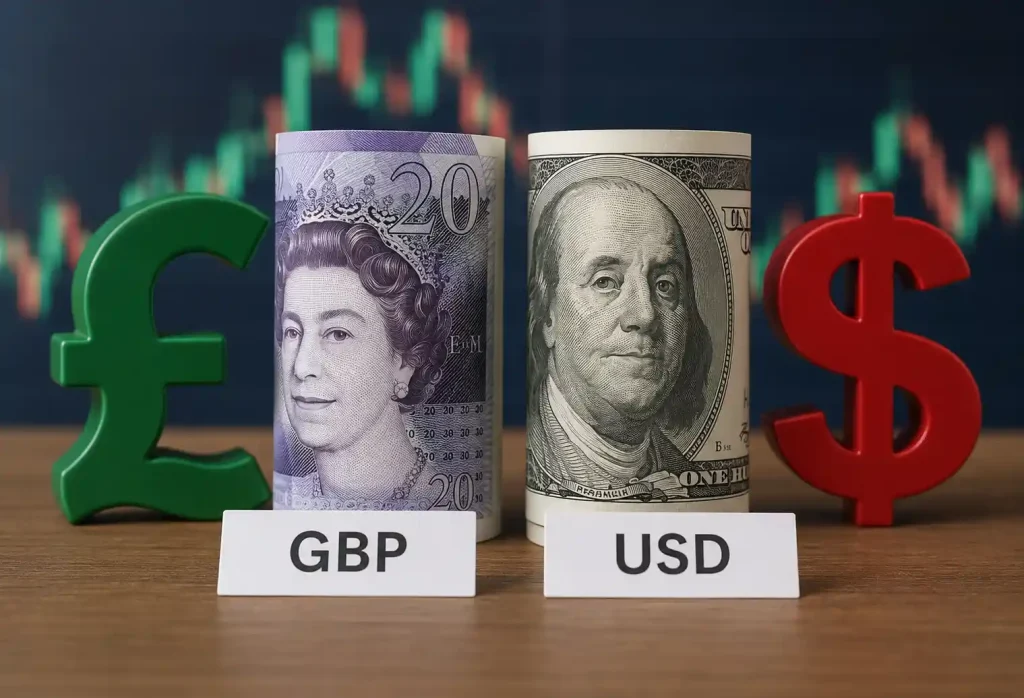
When we say the pound is worth more than the dollar, we mean you usually need more than one dollar to buy one pound. For example, if the exchange rate were £1 = $1.30, someone with one pound could exchange it for 1.30 dollars. That does not mean the UK economy is stronger than the US economy, or that people in Britain have more purchasing power. The nominal value of a currency unit depends largely on how that currency was defined and its history. So the pound's value against the dollar should not, on its own, be used to compare the two countries' economic strength.
The role of history
One key reason for the pound's higher nominal value is its long history and the way the currency unit is structured. Sterling has been one of the world's major currencies for centuries, and before the dominance of the US dollar it played a major role in international trade and the financial system. Over time, the nominal values of currencies have changed, and countries have followed different policies for their money in different periods. So you cannot say that because one pound costs more than one dollar, the British economy is bigger. The exchange rate is simply a ratio between two currency units and should be considered alongside other economic indicators.
How supply and demand affect the pound
Like most markets, the currency market runs on supply and demand. When demand for pounds rises, the pound tends to strengthen; when supply rises or demand falls, it tends to weaken. The Bank of England emphasises that it does not set the exchange rate directly: the pound's price is formed in financial markets through trading and the demand of market participants. That is why the pound-dollar rate can change during a day, a week or a month, and is never fixed. Investors, international companies and currency traders are the most important players.
How interest rates affect the pound against the dollar
Interest rates are a key factor in how attractive a currency is to investors. When UK interest rates are attractive compared with other economies, investors may buy sterling assets for higher returns, and that extra demand can strengthen the pound. The Bank of England explains that, all else being equal, higher interest rates can increase demand for sterling. But the relationship is not always simple or certain, because the market reacts at the same time to inflation, the economic outlook, US Federal Reserve policy and investor expectations. So the pound's value against the dollar is constantly shaped by a mix of factors.
The effect of inflation and purchasing power
Inflation is another factor that can affect a currency's value over the long term. Sharp price rises reduce a currency's purchasing power, and if investors expect inflation in a country to stay high for a long time, they may be less willing to hold assets in that currency. The Bank of England sees price stability as one of the foundations of confidence in money. So when comparing the pound and the dollar, consider inflation and purchasing power in both economies as well as the exchange rate itself. A more expensive pound does not necessarily buy much more of every good or service.
Read more: Buying pounds now: 3 reasons to buy and 3 reasons not to
The pound and the dollar at a glance
The table below shows the main features that influence each currency. It makes clear that the exchange rate is not the result of a single factor; conditions in both economies play a part.
| Factor | British pound | US dollar |
|---|---|---|
| Central bank | Bank of England | Federal Reserve |
| Currency code | Pound sterling (GBP) | US dollar (USD) |
| How the rate is set | Market supply and demand | Market supply and demand |
| Key drivers | Interest rates, inflation, growth and investment | Interest rates, inflation, growth and global demand |
| International role | A major world currency | The world's leading reserve and trade currency |
Is the dollar weaker than the pound?
No, and this is one of the most common mistakes when comparing currencies. One pound being worth more than one dollar does not make the dollar a weak currency. The dollar remains one of the most important currencies in the world for trade, investment and central bank reserves. A currency can have a lower nominal value yet play a much bigger role in the global economy. So treat the pound-dollar rate as a conversion rate between two currency units, not a ranking of economic power. For anyone planning to travel, move, study or exchange currency, the real market rate and its daily changes matter far more than comparing nominal values.
Read more: How currency swings affect migrants' lives in London
What makes the pound rise or fall?
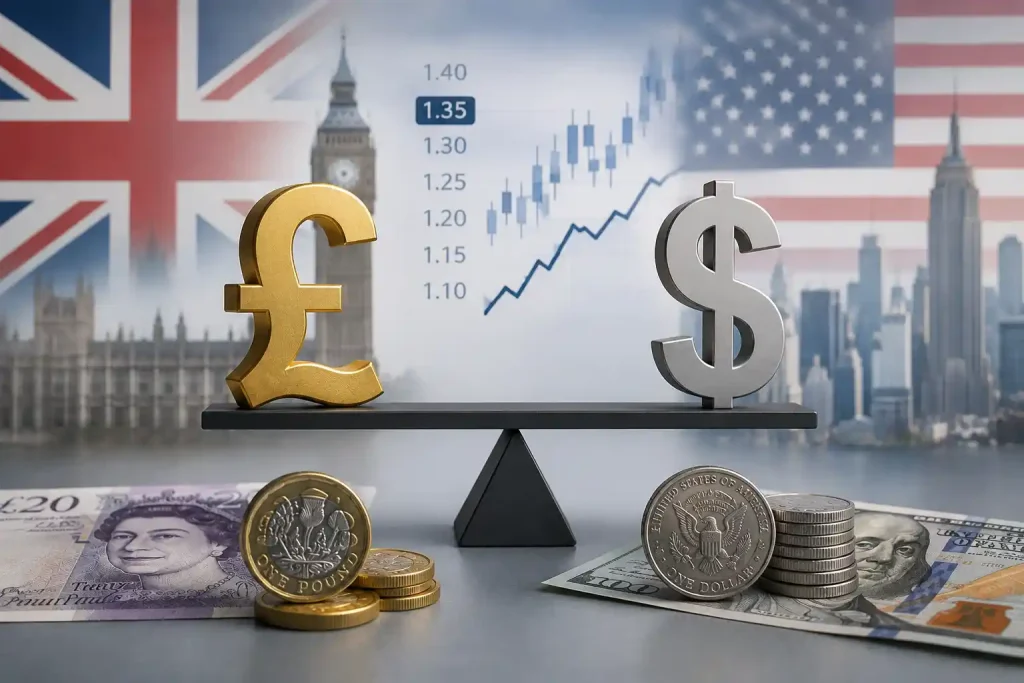
Besides interest rates and inflation, many factors can strengthen or weaken the pound against the dollar. Some of the most important are:
- Bank of England interest rate decisions
- US Federal Reserve decisions and changes in dollar interest rates
- Inflation in the UK and the US
- Economic growth and employment data
- Foreign investment in the UK
- International political and economic conditions
- Investor confidence in the UK economy
- Changes in global markets and capital flows
That is why the pound's value against the dollar can move in response to a single major economic report. In financial markets, traders usually price their expectations into currencies before data is published, which is why rates sometimes move even before an official decision is announced.
Why the pound-dollar rate matters to you
For people in Iran who want to buy pounds, knowing that the pound costs more than the dollar is not enough. The pound-to-rial rate, conditions in the domestic currency market, supply and demand, and the rates quoted by exchange houses all matter. If you plan to buy or sell pounds, check the latest rate before you trade. Checking today's pound rate gives you a clearer picture of the market before you contact an exchange. Remember that buy and sell rates can differ, and conversion costs can affect the final amount.
The role of exchange houses in buying and selling pounds
Exchange houses are one of the main ways individuals and businesses access foreign currency. When buying pounds, the live market rate, available currency, the buy and sell rates and the terms of the deal all matter. A reputable exchange can give you more accurate information about available rates and make conversion simpler. Sarafi Bartar London is a place to check and follow the pound rate for anyone looking for currency services. To make better decisions, compare rates and watch market conditions, because the pound's value against the dollar can change quickly in response to economic news and financial developments.
Summary
Why is the British pound worth more than the US dollar? It has more to do with the history of the currency unit, monetary policy and how exchange rates are formed than with the economic strength of either country. The pound-dollar rate is set by supply and demand in the global market, and factors such as interest rates, inflation, economic growth, capital flows and investor confidence can change it. So you shouldn't judge the economic strength of Britain and America from the price of one pound and one dollar. When exchanging currency, check the day's rates and use a reputable provider such as Sarafi Bartar London to make better-informed decisions.
Frequently asked questions
Why is one pound more expensive than one dollar?
Because the nominal value of each currency unit depends on its history, monetary policy and supply and demand, and does not directly reflect a country's economic strength.
Does a more expensive pound mean the UK economy is stronger than the US economy?
No. Nominal currency values are not a good way to compare the size or strength of economies; indicators such as GDP, productivity and purchasing power should be considered.
Will the pound always be worth more than the dollar?
No. Exchange rates change, and factors such as interest rates, inflation, economic growth, monetary policy and market conditions can push the pound up or down against the dollar.